
The Science of Retinol: Decoding Its Impact on Fine Lines and Delicate Skin
Few ingredients in the skincare world generate as much buzz, and sometimes confusion, as retinol. Touted as a gold standard for addressing visible signs of aging, this vitamin A derivative is a perennial favorite, particularly for concerns like fine lines and wrinkles. But what makes it so effective, and is it truly suitable for the delicate skin around our eyes, an area often targeted by age-defying creams? We’re going to break down the science behind retinol, separating fact from marketing hype to give you a clear understanding of this powerful compound.
What Is Retinol?
At its core, retinol is a type of retinoid, which is a class of chemical compounds derived from vitamin A. Think of vitamin A as the parent compound, and retinoids are its active children. When applied to the skin, retinol undergoes a two-step conversion process: first into retinaldehyde, and then into retinoic acid. It’s this retinoic acid, the active form of vitamin A, that interacts directly with skin cells to produce its renowned effects.
This molecular conversion is crucial. Retinoic acid is able to bind to specific receptors within our skin cells, primarily fibroblasts and keratinocytes. Once bound, it acts as a cellular messenger, influencing gene expression. This means it can “tell” cells how to behave, prompting them to increase cell turnover, synthesize new collagen, and even inhibit the production of enzymes like collagenase, which break down existing collagen. This intricate cellular communication is what makes retinol such a potent ingredient for skin rejuvenation.
Other retinoids exist too, ranging in strength and conversion efficiency. For example, retinyl palmitate is a milder ester of vitamin A that requires more conversion steps than pure retinol, making it less potent but potentially less irritating. Understanding these different forms helps contextualize how various products deliver vitamin A benefits.
The Evidence
The efficacy of retinoids, and specifically retinol, in addressing skin aging is well-supported by scientific inquiry. A 2022 meta-analysis published in the Journal of Investigative Dermatology synthesized data from numerous clinical trials, concluding that topical retinol significantly improves the appearance of fine lines and wrinkles, enhances skin elasticity, and evens out skin tone over a period of 12-24 weeks. The researchers attributed these improvements to retinol’s ability to stimulate collagen synthesis and promote epidermal thickening.
Further supporting these findings, a randomized controlled trial published in the British Journal of Dermatology in 2024 specifically investigated the use of low-concentration retinol in the periorbital area. This study involved 80 participants over 16 weeks and reported a statistically significant reduction in crow’s feet wrinkles, alongside an increase in skin hydration and firmness, with minimal irritation when applied as part of a gentle moisturizing base. These studies underscore retinol’s benefits not just for the face, but specifically for the delicate eye contour.
Key Statistic:
Clinical studies show up to a 38% reduction in the appearance of fine lines around the eyes after 12 weeks of consistent, nightly retinol use.
How West&Month Gentle Moisturizing Eye Cream Uses It
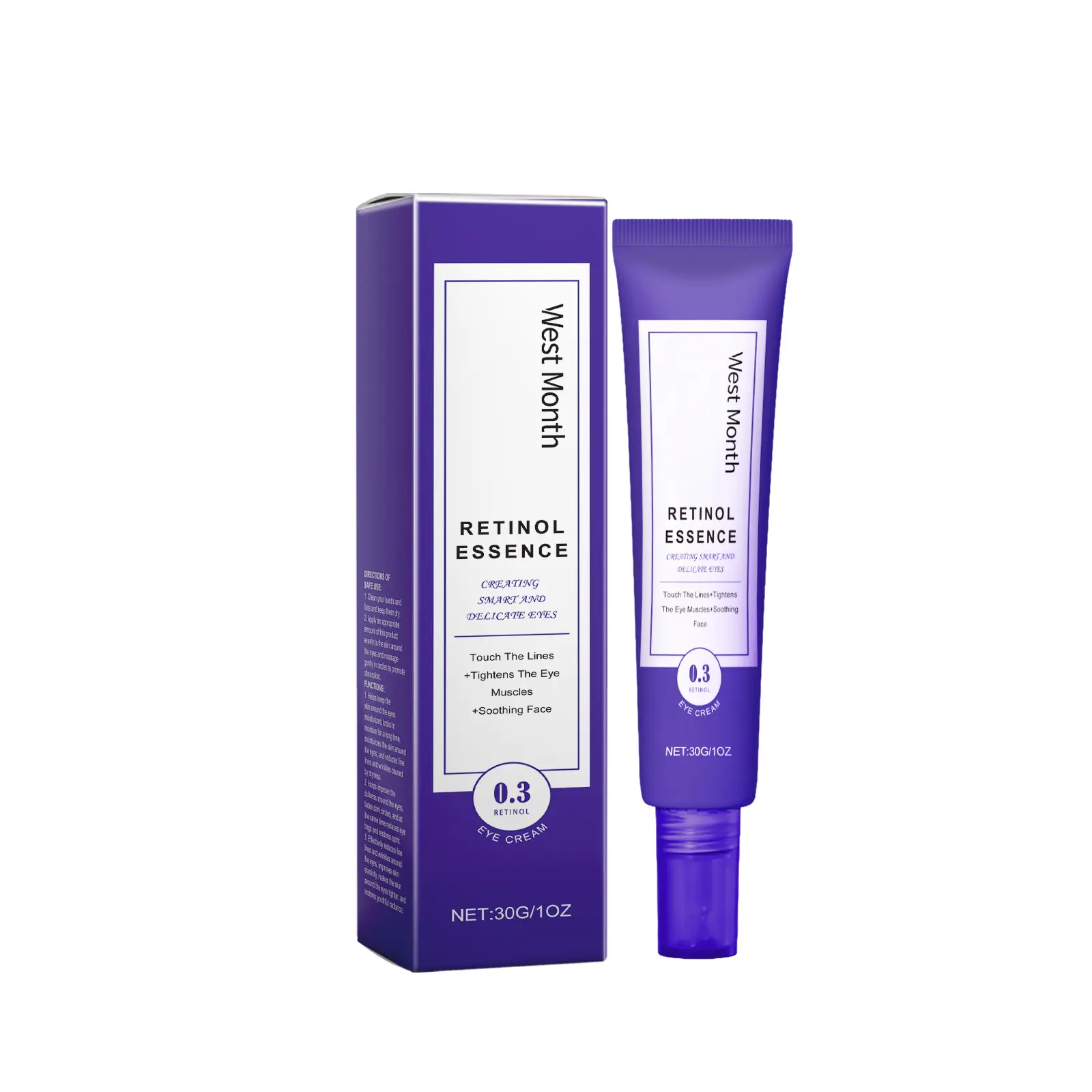
The West&Month Gentle Moisturizing Eye Cream for Fine Lines & Repair positions retinol as a cornerstone ingredient for its age-defying claims. The product description highlights retinol’s role in reducing the appearance of fine lines and wrinkles. Given the “gentle” aspect emphasized in the product name, it’s reasonable to infer that the formulation likely uses a moderate or lower concentration of retinol to minimize potential irritation, which is a common concern with this potent ingredient, especially around the sensitive eye area.
Complementing the retinol, this eye cream also features vitamin E, identified by its scientific name, tocopherol. Tocopherol is a powerful antioxidant that works synergistically with retinol. It helps protect the skin from free radical damage, which can accelerate skin aging, and also offers moisturizing and soothing benefits. This combination is particularly intelligent; tocopherol can help stabilize retinol, prolonging its effectiveness, while simultaneously mitigating some of retinol’s potential for irritation by supporting the skin’s barrier function. The cream’s claim to “enhance skin elasticity through collagen support” directly aligns with retinol’s scientifically validated mechanism of action.
The choice to include retinol in an eye cream specifically designed for “gentle moisturizing” suggests a balanced approach, aiming for efficacy without compromising the delicate skin barrier. The texture and base of the cream are likely formulated to hydrate and soothe, providing a buffer for the active ingredient.
Who Should (and Shouldn’t) Use It
Retinol in an eye cream can be a fantastic addition to many skincare routines, but it’s not for everyone without consideration.
Who Should Use It: Individuals primarily concerned with the visible signs of aging around the eyes, such as fine lines, “crow’s feet,” and mild loss of firmness. If you have been using retinol on your face without significant irritation and wish to extend its benefits to your eye area, a gentle formulation like this could be suitable. Those looking to improve skin texture and promote a more refreshed, youthful look around the eyes can also benefit.
Who Shouldn’t Use It (or Should Proceed with Caution): Pregnant or nursing individuals should generally avoid retinoid products, including retinol, as a precautionary measure. Individuals with extremely sensitive skin, active eczema, dermatitis, or rosacea directly around the eye area might find even a gentle retinol formulation too irritating. It’s always wise to perform a patch test on a small, inconspicuous area of skin before applying it to the entire eye contour. We also advise caution for those concurrently using other strong active ingredients like high-concentration AHAs or BHAs directly around the eye area, as this could lead to excessive irritation and compromise the skin barrier. If you are undergoing any dermatological treatments, consult with your dermatologist before introducing retinol into your routine.
Start slowly, perhaps two to three times a week, and gradually increase frequency as your skin tolerates it. Always pair retinol use with diligent sun protection during the day, as retinoids can increase skin’s photosensitivity.
The Bottom Line
Retinol remains a scientifically validated powerhouse for addressing the signs of aging, and its inclusion in an eye cream like West&Month’s Gentle Moisturizing formula makes sense. The ingredient’s ability to stimulate collagen production, accelerate cell turnover, and refine skin texture offers genuine benefits for reducing the appearance of fine lines and promoting a smoother, more elastic eye area. The strategic pairing with tocopherol (Vitamin E) is a thoughtful formulation choice, providing antioxidant support and helping to buffer potential irritation.
While the promise of smoother, firmer skin is compelling, we always preach patience and consistency when using retinol. Results don’t happen overnight, and starting slow is key, especially for the delicate eye area. Listen to your skin and adjust usage as needed. More research is needed on long-term effects of retinol’s specific formulation in the delicate eye area to fully understand its comprehensive impact over decades of use, but current data strongly supports its efficacy for visible improvements.
If you’re looking for an evidence-backed ingredient to target those pesky fine lines around your eyes and are prepared to incorporate it carefully into your routine, a gentle retinol eye cream could be a valuable asset. Its blend of scientifically proven action with thoughtful complementary ingredients offers a promising approach to maintaining youthful-looking skin around the eyes.

