
Listen, I have a confession to make. I am absolutely terrible at wearing sunscreen every day. I know, I know—it’s the “holy grail” of skincare, the number one rule of aging gracefully, and all that. But honestly? Most sunscreens are just… gross. They’re either so thick you feel like you’re frosting a cake on your face, or they smell like a chemical factory, or they leave you looking like a literal ghost in photos. I’ve spent way too much money on high-end brands that promised the world and delivered nothing but breakouts. So, when I stumbled upon the West&Month Probiotic SPF 50 Brightening Waterproof Day Cream, I was skeptical. Probiotics? In a sunscreen? It sounded like another marketing gimmick, but I decided to give it a shot anyway because my current tube was running on empty and my skin was looking a bit dull lately.
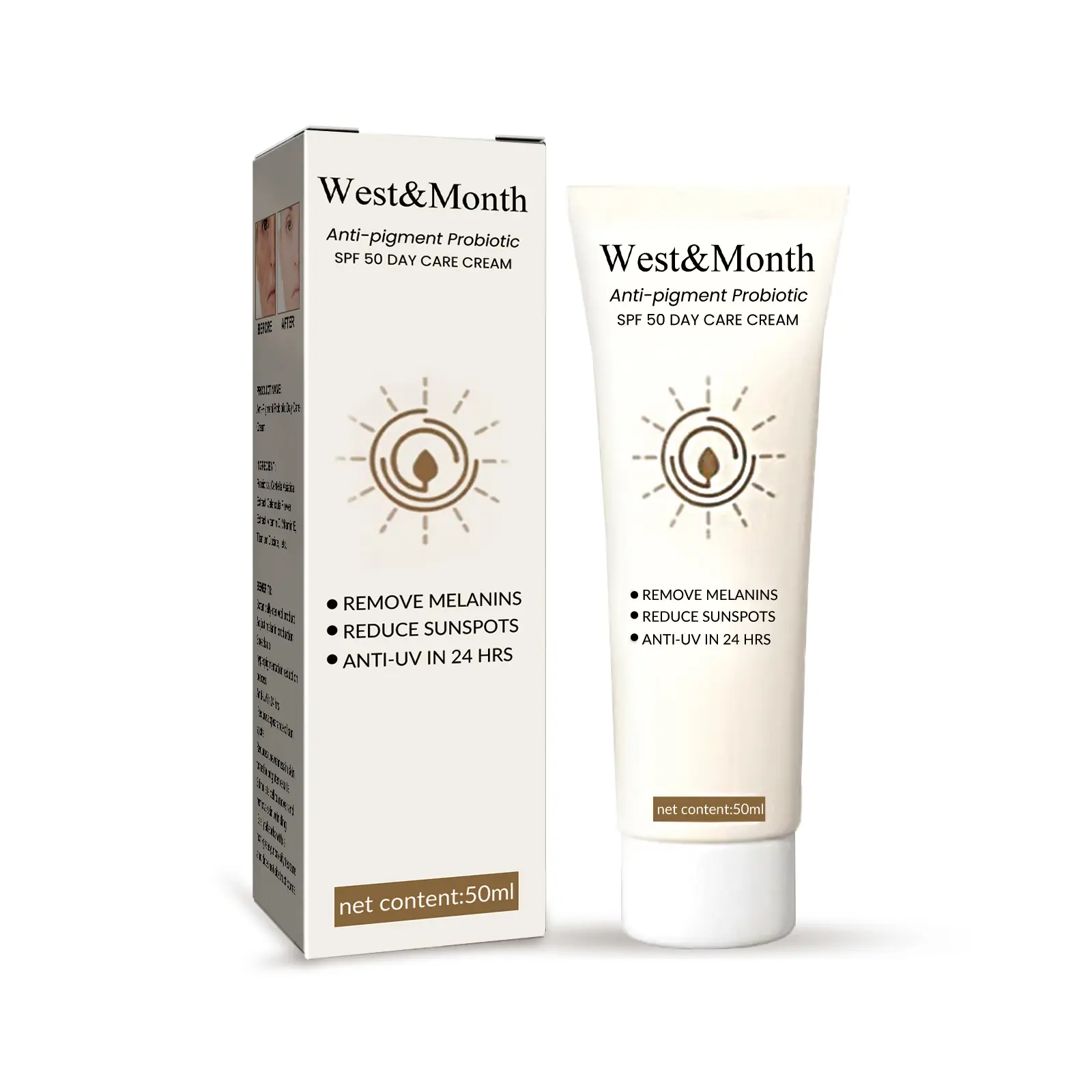
I’ve been using this for about three weeks now, taking it through the wringer—humid morning walks, long office hours under fluorescent lights, and even a sweaty Saturday gardening session. Here’s the thing: it’s actually kind of impressive. I’m not saying it’s a miracle in a bottle, but for an affordable waterproof day cream, it’s doing a lot of things right. Let’s break down what’s actually happening under the hood of this product and why I haven’t tossed it into my “skincare graveyard” yet.
What’s the Deal with Probiotics in Sunscreen?
So, why probiotics? I did a little digging because I’m a nerd like that. Usually, you think of probiotics as something in your yogurt, right? But apparently, our skin has its own microbiome—a tiny ecosystem of bacteria. When that gets messed up (by harsh soaps, pollution, or too much sun), your skin gets grumpy. It looks red, it gets dry, or it breaks out. The West&Month Probiotic SPF 50 Brightening Waterproof Day Cream includes these to help keep that barrier happy while the SPF 50 does the heavy lifting against UV rays. It’s like giving your skin a shield and a multivitamin at the same time.
Alongside the probiotics, it’s got Centella Asiatica (Cica) and Calendula. If you’ve ever had a sunburn or a weird rash, you probably know these are the “calm down” ingredients. Cica is famous in K-beauty for healing, and Calendula is just super soothing. I noticed that on days when my skin felt a bit tight or irritated from the wind, this cream didn’t sting. That’s a huge win for me because I’ve tried “best probiotic sunscreen for glowing skin” candidates before that made my face turn bright red the second I stepped outside. This one feels much more like a gentle moisturizer than a harsh chemical block.
Here’s a quick breakdown of how it stacks up against the generic stuff I used to buy at the drugstore. I’m a visual person, so I made a little chart to show you the difference in my experience.
| Feature | West&Month Probiotic Cream | Generic SPF 50 |
|---|---|---|
| Main Ingredients | Probiotics, Cica, Calendula | Basic UV Filters, Alcohol |
| Texture | Lightweight, Refreshing | Thick, Greasy |
| White Cast | Minimal (Brightening effect) | Often noticeable |
| Skin Feel | Hydrated & Smooth | Sticky/Tacky |
My First Impressions: Texture and the “Ghost” Test
When I first squeezed some out, I thought, “Oh no, here we go again.” It looks like a standard white cream. But the texture is actually quite thin—more like a lotion than a heavy cream. I followed the directions and applied it about 20 minutes before I went out for my morning coffee run. I massaged it in, and at first, there was a definite “brightening” effect. Now, let’s be real: sometimes “brightening” is just code for “we put a little white pigment in here.” But after about five or ten minutes, it really settled in. It didn’t leave me looking pale; it just made my skin look… awake? Like I’d actually slept eight hours instead of scrolling TikTok until 2 AM.
One thing I have to mention—and this is my only real gripe—is that you really have to massage it in. If you just slap it on and walk away, you’re going to have streaks. But if you take 30 seconds to actually work it into your skin like the bottle says, it disappears nicely. It has a very faint, clean scent—nothing like that “fake coconut” smell that usually screams “I’M WEARING SUNSCREEN.” It just feels like a nice, refreshing day cream. Does West&Month Probiotic SPF 50 Brightening Waterproof Day Cream really work for the “no-makeup” look? Yeah, I’d say so. It gives a subtle glow that isn’t greasy, which is a hard balance to strike.
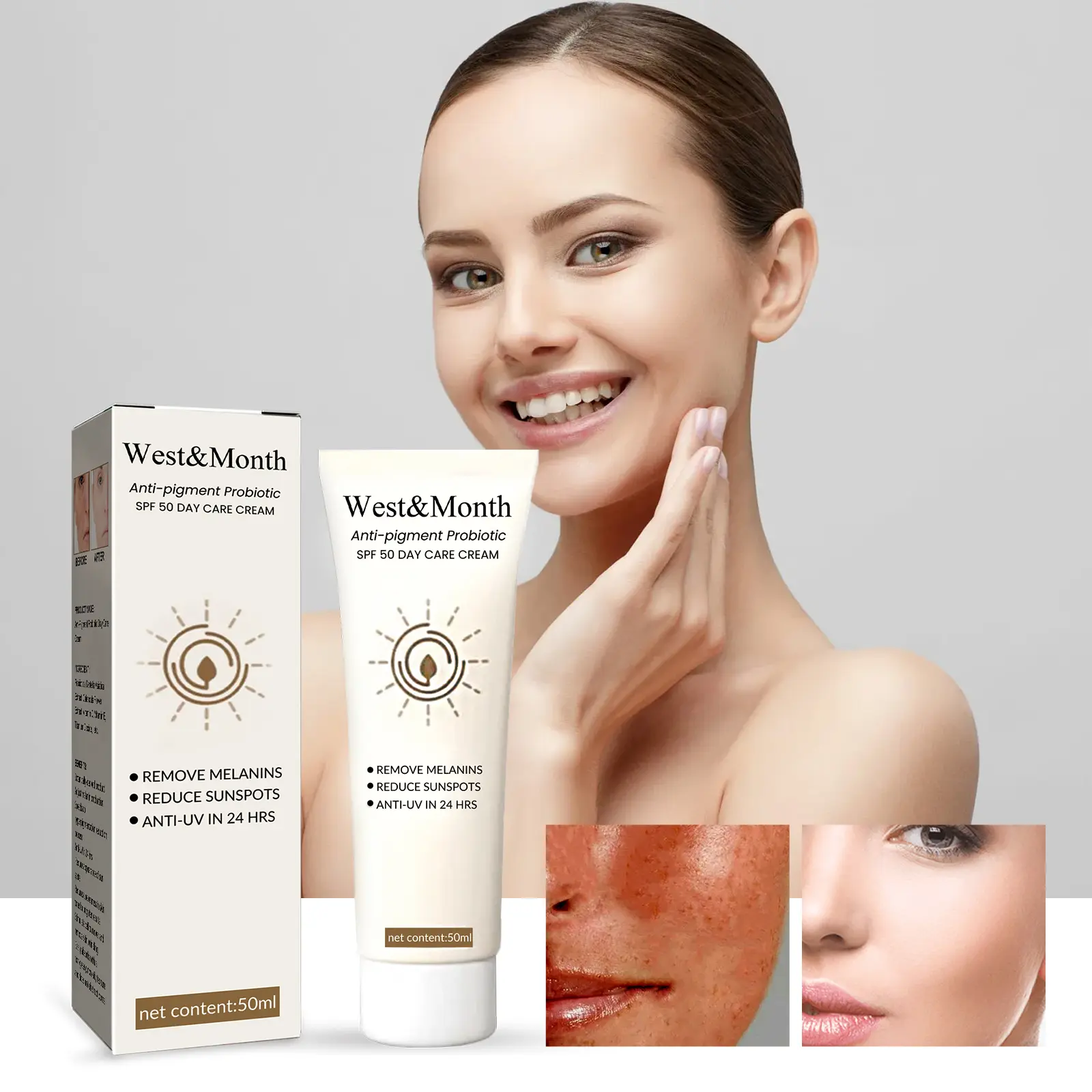
I also tried wearing it under my foundation. Usually, this is where sunscreens fail for me. They either pill up (you know, those annoying little white rolls of product) or they make my makeup slide off by noon. Surprisingly, this acted like a decent primer. My foundation went on smoothly over the top, and it didn’t feel heavy even by the end of the day. If you’re looking for a West&Month review honest opinion on its versatility, I’d give it a solid 8/10 for makeup compatibility.
Living With It: The Sweat and Water Test
Okay, let’s talk about the “waterproof” claim. I live in a place where the humidity is basically a warm, wet blanket. I took this out on a 3-mile walk on a Saturday morning. I was sweating—not like a “cute glow” sweat, but like a “my hair is sticking to my neck” sweat. Usually, that’s when sunscreen starts running into my eyes and stinging like crazy. You know that burn? It’s the worst. I was pleasantly surprised that this stayed put. I didn’t get any eye-sting, and when I got home, I could still feel the protective layer on my skin.
The instructions say to reapply every 2-3 hours, which is standard for any SPF. I’ll be honest, I usually forget to reapply unless I’m at the beach, but even with one solid application in the morning, I didn’t see any redness after being outside for a few hours. The waterproof formula seems to hold up well against light moisture and perspiration. If you’re planning on doing laps in a pool, you’ll definitely need to reapply the West&Month Probiotic SPF 50 Brightening Waterproof Day Cream as soon as you dry off, but for daily life and light exercise, it’s more than enough.
I also want to touch on the “brightening” aspect again. Over the three weeks I’ve been using this, I’ve noticed my skin tone looks a bit more even. Is it a replacement for a high-strength Vitamin C serum? Probably not. But for a daily

